@bitprophet #catpics2019 #letsdothis https://t.co/ukdAbyVkeU
Entries for #I
← first ← previous page 16 of 61 next → last →
@davewiner My take a while back on federation, silos, and colonies @bluesky #diso
https://t.co/OWN5ynxCHU
RT @chrismessina: This post from @steveivy that @ErinJHolmes found on the 10 year anniversary of the #DiSoProject is also newly relevant: h…
You know what #FrozenII was good! Was it Scorsese good? Is Scorsese good? It was good for those girls dressed like Elsa coming out of the theater, it was good for my daughter.
None#FrozenII poked fun at the first film, and had an 80s power ballad, and ended with an orchestra-metal version of the “breakout” song.
Was it objectively good? I don’t think there is such a thing. But it did what it was designed to do, and then some!
None#eveonline explorers and relic hunters: if you are sci-fi fans, check out Alistair Reynolds Revenger - it’s not brilliant (his first YA book) but has some fun bits that are very reminiscent explorer culture
"SystemExtensions is a new framework that allows to install and manage user-space code that extends the capabilities of macOS #extensionhell #conflictcatcher https://t.co/kW1EM2V1mu
And Now for Something Completely Different
(With apologies to Monty Python)
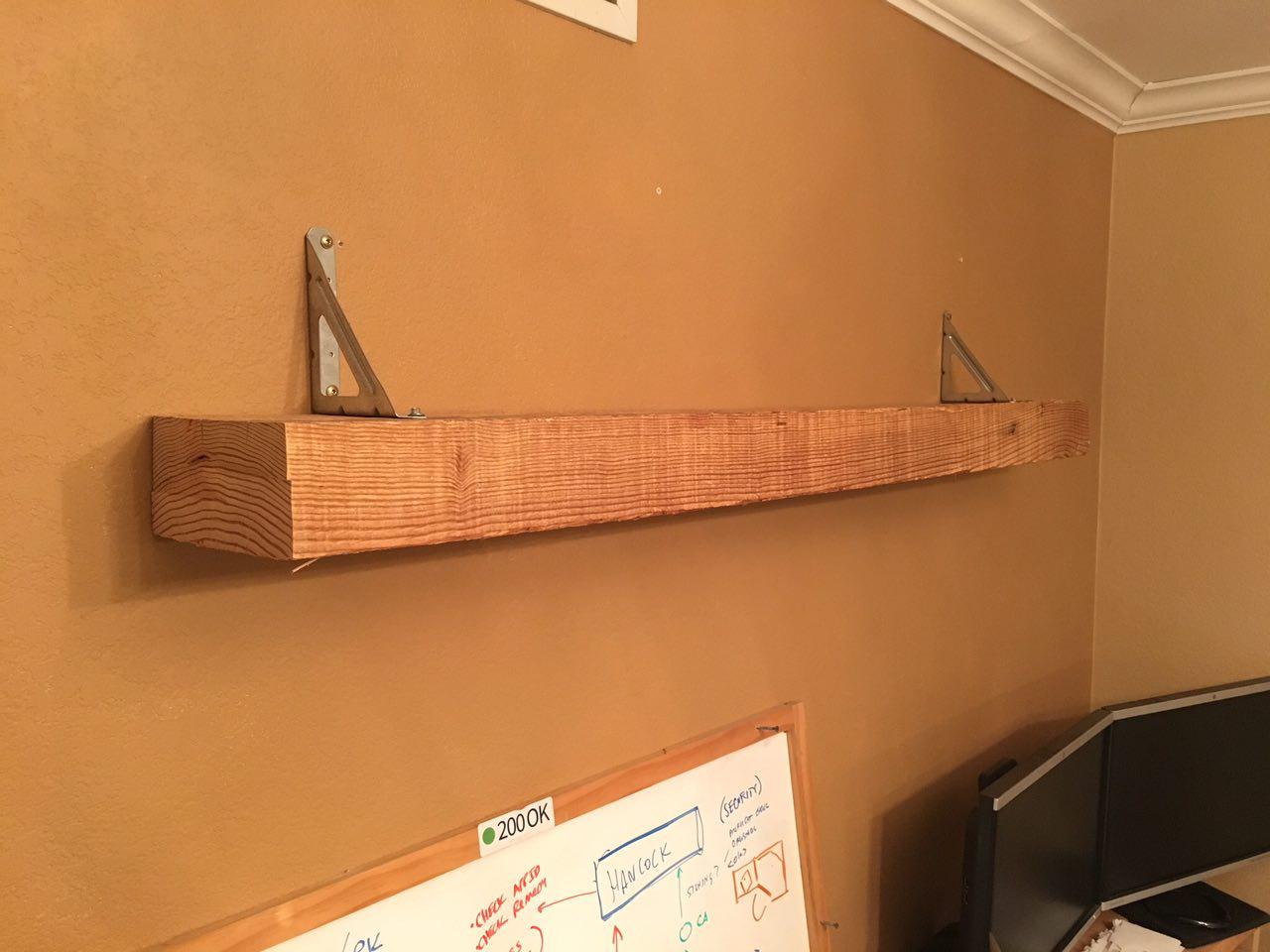
After a couple of weeks of renewed tech posting, I've been doing holiday stuff for a couple of days, and now I'm "hacking my house(#DIY-ing). Here's the evidence:
.jpg)
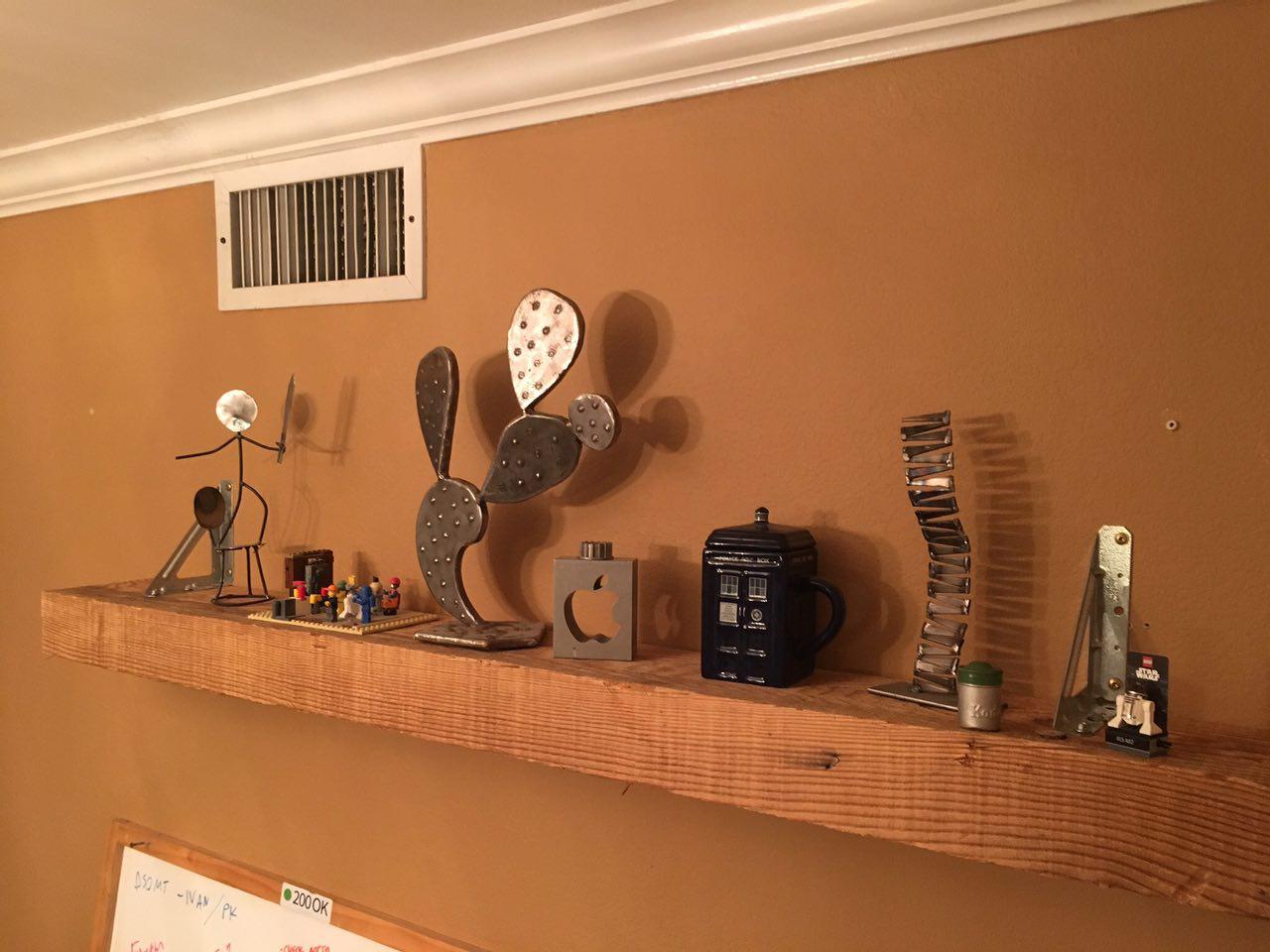
My 14yo and I positioning a rough-hewn beam which will be a shelf in my new office.
And the final touches:
Kevin Marks asks "is DiSo back?" I hadn't thought about it, but...
Damn straight #DiSo is back.
Not necessarily the project, but the ideas? Absolutely. As we begin to see the Silos we created for what they are, some are building the tools to re-colonize the Open Web. Are you publishing online? Do you own your own content? Are you sure? Or are you dependent on Twitter and Facebook - the #silo sites - of the world to carry (and monetize) your writing, your activities, your family photos?
I know I still am in many ways. It's just so easy. But easy leads to exploitation. So tie your shoes, button your coat, and get to work:
The Revolution Will Be Federated
Much has been made lately about Twitter having become a trashfire, with rampant trolling and abuse of women, monitories, and non white-dude-being folks. Being a white dude in tech, I was generally ignorant of the direction things were going, as my timeline was mostly other white dudes in tech congratulating themselves for their cleverness.
Around the time that GamerGate was blowing up, I made the concious decision to start following a larger variety of people on Twitter, in an effort to break out of the cocoon I found myself in. One day I need to write a post about that, but this is not that post.
This post is about how I discovered that, while I wasn't looking, an alternative began growing up from its very nerdy roots and is becoming something real people could - and should - use.
Life In The Silo
The major social media sites - Twitter, Facebook - are commonly referred to as silos - great collections of content with few connections to the outside world. Content flows in from users (and the web) but not out again.
The picture I've recently started forming is the Dystopian Underground Community from the science fiction genre: The Haves live near the surface, in the Silo's highest levels, blessed by light and air (and attention). The Have-Nots live below, garnering less and less light from the source, instead inheriting the castoffs and scraps dropping from the levels above them. The Upper-Midlevels can still see the light clearly, pretending that they are not dependent on the goodwill of the Haves for access, and pretending that there are not hundreds of levels of population below, struggling for life.
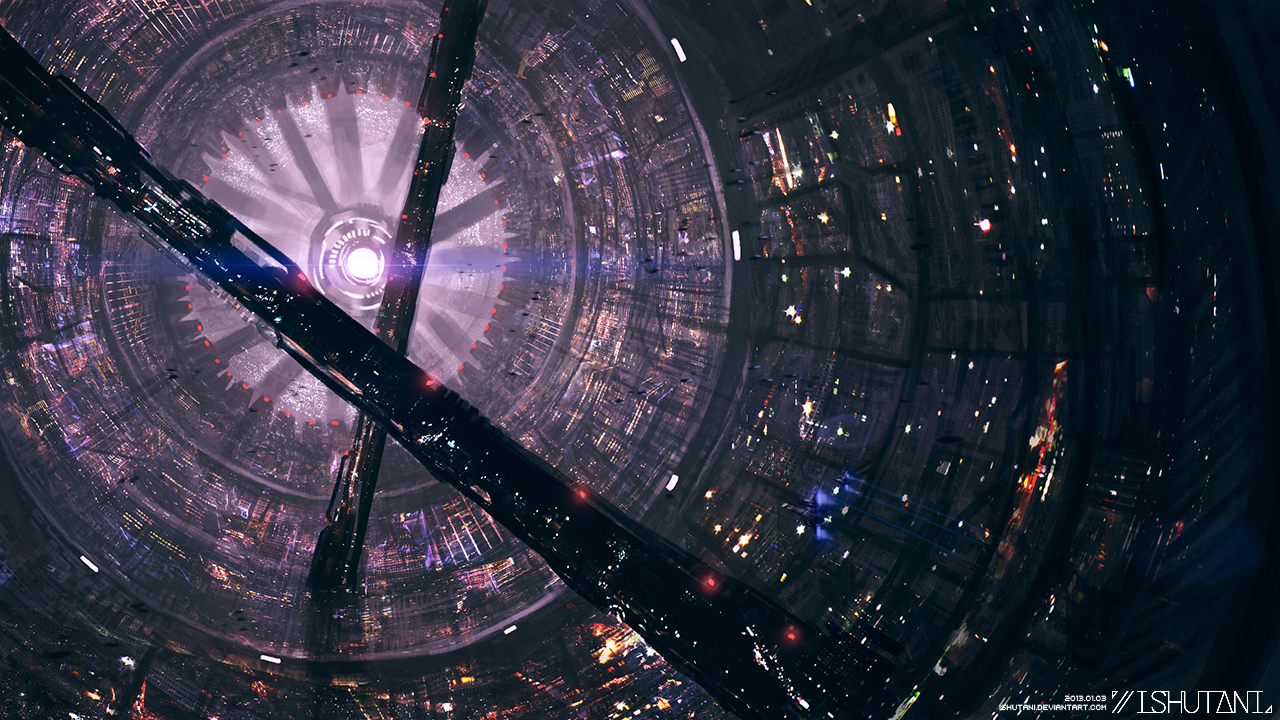
The residents in the Midlevels are used to life in the twilight, move in their circles of family and friends, and have grown to believe that making a life from the hand-me-downs from above is normal. They know of the lower levels, they depend on services that the residents there provide from time to time, but are convinced that either life there is not so bad, the residents are living in the dark by choice, or the worst: believe that they have earned the right to the light, rather than being born to it, and those below somehow don't deserve access.
The further one's social circle gets from the dominant Haves, the deeper into The Below, the harder life in the silo becomes. The Below is rife with roving gangs of trolls, descending even from the Midlevels where they live in relative comfort, to harass and abuse the citizens struggling to make ends meet on the scraps of attention and spaces left to them by the Haves and those in The Above. The trolls have little to fear from The Below, save the reminder that they too are Below - somon else. And perhaps it is that thought that drives them to stand on walkways and corners, hurling insults and petty self-justifications at the passing residents.
The Silo is a terrible place for those not born into, or assigned to, the upper levels. Fortunately, there is hope: The federated Colonies...
The Colonies
Out on the surface, separated from the Silo, a new set of colonies is being built. Each colony is self-sufficient, with resources for every inhabitant, and attention to spare. Some are small - just a few tens or hundreds of inhabitants. Others are massive, home to hundreds of thousands of residents. Here the domed and towered structures bask in the light, with a vitality and energy long since lost in the Silo.
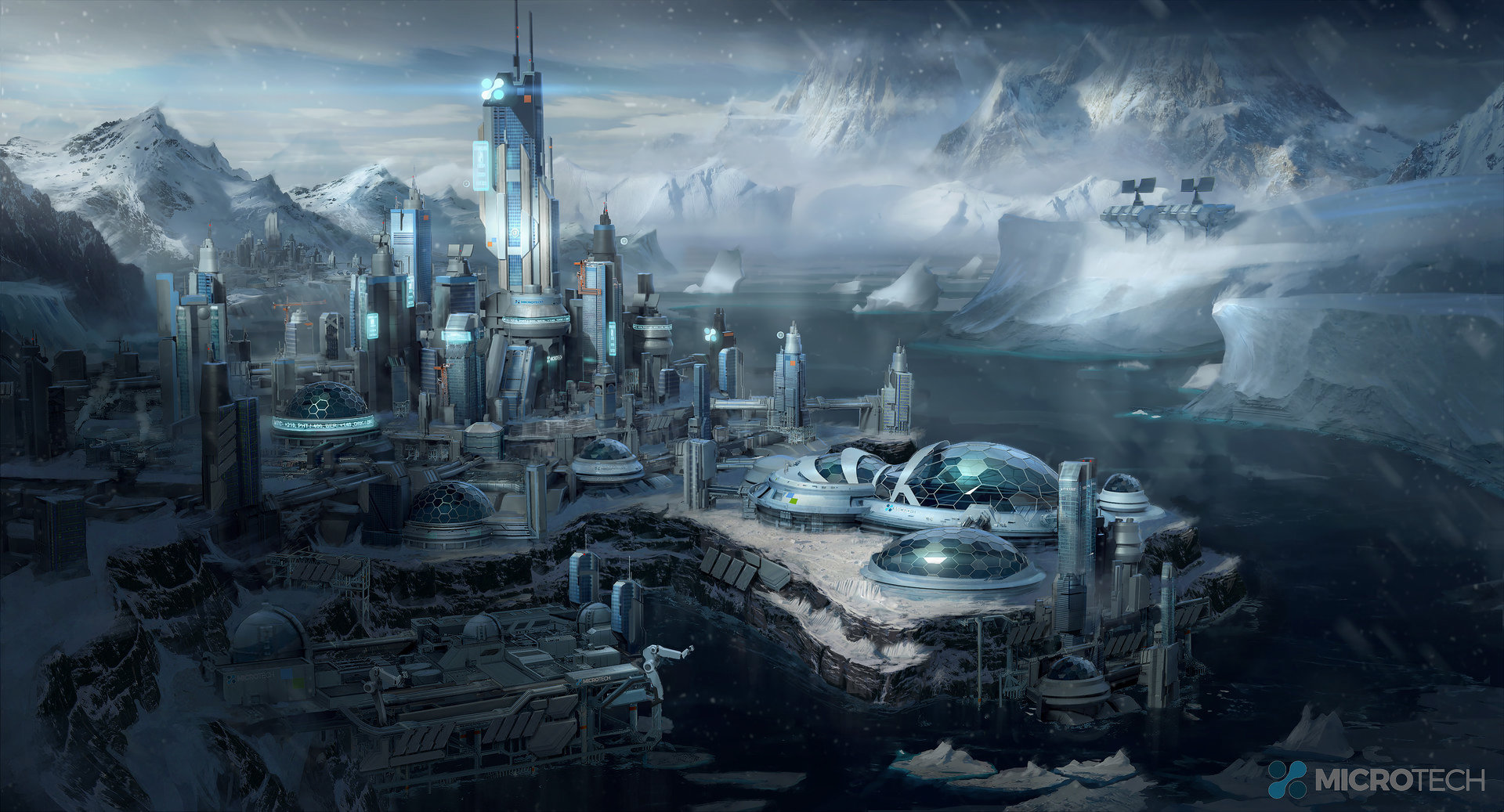
The colonies are home to nearly a million former residents of the Silo. Some still descend into the Silo to visit family, friends, and invite others to the colony. Some have moved permanently, homesteading a new network of sheltered structures here. These colonies are a federation - communication and residents move freely from one to the other, local administrators making sure that their respective codes of conduct are maintained, provide space and facilities for the residents, and coordinate relationships with the other colonies. Residents find a colony of likeminded individuals, and can move from colony to colony as desired, with some paperwork to transfer residency.
This isn't a utopia; there are always disagreements - we're human after all - and adminstrative conflicts have led to colonies disassociating with one another. But here on the surface they are free to do choose their connections, joining and leaving the federation as desired.
Leaving the Silo
If Twitter and Facebook are the Silos, blessing the privileged while taking advantage of the Outsider and the Other, the Colonies can be found in the federated web, the open social networks - sites like Mastodon, Diaspora, Friendica, and GNU Social.
Mastodon in particular has established itself as a viable alternative to the murky depths of the Silo. With a million-plus users spread over more than a 1000 instances, each server, or colony, is a full-fledged social network, with users posting, sharing, following, and liking each other's content. But more than that, each user can remotely follow users in other servers, bringing new viewpoints and content into their space.
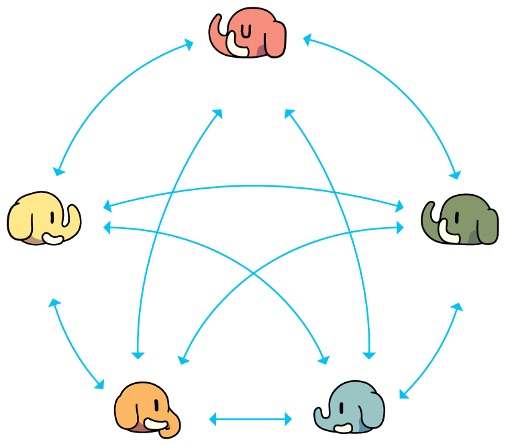
Is a migration to federated social media sites going to break the power fo the Silos? No. There are enough users happy to be near their friends and family, or eager to harangue and harass those in The Below, while jealously eyeing The Above.
But maybe some at every level of the Silo will find themselves looking for something better, a place with something for everyone, a system that is not designed to entrap and enclose them, and make them subservient to the whims of execs and advertisers.
The Revolution will be Federated.
- Tunnel image by Ishutani
- Colony image by Ken Fairclough
- The Silo concept was partially inspired by Hugh Howey's book WOOL
The Political Machinations of Disenfranchisement, 2016
> "I don't want everybody to vote. Elections are not won by a majority of the people. They never have been from the beginning of our country and they are not now. As a matter of fact, our leverage in the elections quite candidly goes up as the voting populace goes down."
The New Face of Jim Crow: Voter Suppression in America -- People For The American Way
Working to discourage one's political opponents' supporters has a long history, but the machinations on display in the last decade, and this election in particular, are offensive.
Election committees are moving polls to difficult-to-reach areas in youth and minority populations, as Jonathan Katz tweets:
North Carolina. In 2012, Duke students could vote early on the main campus. This year, the polls were moved to a little-known spot. Result: pic.twitter.com/GPWZuUfQNL
— Jonathan M. Katz (@KatzOnEarth) November 3, 2016
Donald Trump is encouraging his supporters to:
> "...go down to certain areas and watch and study, and make sure other people don't come in and vote five times"
Trump Is Recruiting an Army of Poll Watchers. It's Even Worse Than It Sounds. [Emphasis mine.]
Pro-Trump trolls are buying fake Clinton ads on Twitter targeting minorities, telling them they can text in their votes (you can't):
>The recent social media ads target Clinton supporters with the hashtag #ImWithHer and give instructions to "Vote Early" by texting “Hillary” to the number
Some other tactics being deployed, mostly derived from the aforementioned PFAW study:
Burdensome of ID Laws
From my own home state of Arizona:
> In November of 2004, Arizona voters passed Proposition 200, which implemented harsh voter identification requirements (as well as proof-of-citizenship requirements—discussed in the next section of this report). The law requires voters who cast a ballot at a polling place on Election Day to present photo identification deemed “acceptable” by Arizona’s Secretary of State, such as a driver’s license, or two alternate forms of ID that include the name or address of the voter such as a utility bill or a bank statement. Such requirements can disenfranchise voters without photo ID by making it hard for them to cast ballots if they live at a residence where someone else, such as a spouse, parent, or roommate pays the bills, or if they are uninformed about the rules. Students, the poor, and senior citizens are among the groups that are most likely to be adversely affected.
Proof-Of-Eligibility as Voter Intimidation
> In this corner of rural Georgia, African-Americans are arrested at a rate far higher than that of whites.
> But the deputy had not come to arrest Mr. Flournoy. Rather, he had come to challenge Mr. Flournoy’s right to vote.
Critics See Efforts by Counties and Towns to Purge Minority Voters from Rolls
Fear-Mongering and Voter Registration
>Such proof-of-citizenship requirements are often rationalized through fear tactics—namely the claim that non-citizens (especially “illegal immigrants”) are attempting to register to vote. But no evidence exists to indicate that this is a problem.
The New Face of Jim Crow: Voter Suppression in America -- People For The American Way
Reduced Polling Resources and Lines
In communities where the number of polling places and hours of operation are reduced, resulting long lines impact voter turnout.
> While long lines can suppress the vote in any precinct, evidence indicates that such lines often form at polling places that are frequented by students, people of color, and low-income voters who often do not have the time or the resources to wait many hours.
The New Face of Jim Crow: Voter Suppression in America -- People For The American Way
In North Carolina, as one example, Republicans lobbied to limit the hours during which minorities tended to vote:
>Emails uncovered by Reuters through a public records request revealed that local Republican leaders lobbied at least 17 county election boards to limit the hours that voting sites could stay open — particularly to cut down on weekends and evenings, when Democratic voter turnout tends to be higher
North Carolina Republicans conspired to limit early voting to keep African-Americans from the polls
An accounting of The Accountant
Update Nov 1, 2016: I first posted this series of tweets as a Storify but the embed UI was so bad I couldn't leave it here. I'm going to rewrite this as a blog post once I have time to digest it some more. In the meantime you can read An accounting of The Acountant on Storify.
Randomized color choices in SASS
For a bit of variety, I decided to figure out how to generate a new front page header background and link colors whenever I rebuilt the blog (new posts, etc). This is still a static site, so no wizzy javascript stuff, I just wanted to do it in SASS.
This is what I came up with.
```sass $colors-list: ( // background color, link color #DAE076 #AD5C55 #A9C9C5 #4A676D #AD5C55 #5E7D68 #374768 #718A8A, ); $color-index: random(length($colors-list));
// Header description box
$colors: nth($colors-list, $color-index);
$header-desc-background-color: nth($colors, 1);
// Link color
$link-color: nth($colors, 2);
```
I may rework this as a map (dictionary) later on so I can add other theme-y things, but it was kinda fun to work out for now.
← first ← previous page 16 of 61 next → last →